Military history overflows with bizarre blueprints, yet few proposals match the sheer audacity cooked up during the bleakest winters of global conflict.
Anzeigen
Allied convoys were getting torn to shreds across the Atlantic, while shipyards faced a crippling shortage of rolled steel.
Enter Geoffrey Pyke, clutching a proposal to carve massive aircraft carriers out of pykrete—a stubborn slush of wood pulp and frozen water.
This fever-dream undertaking is precisely why Project Habakkuk became WWII’s strangest ship idea, haunting naval architects and fascinating historians ever since.
Examining this frozen monument offers modern professionals an oddly comforting study in desperate problem-solving, resourcefulness, and managing high-stakes creative projects under fire.
Anzeigen
Readers will untangle the core engineering madness, material realities, and ultimate political fallout behind this floating glacier.
What Was Project Habakkuk and How Was It Conceived?
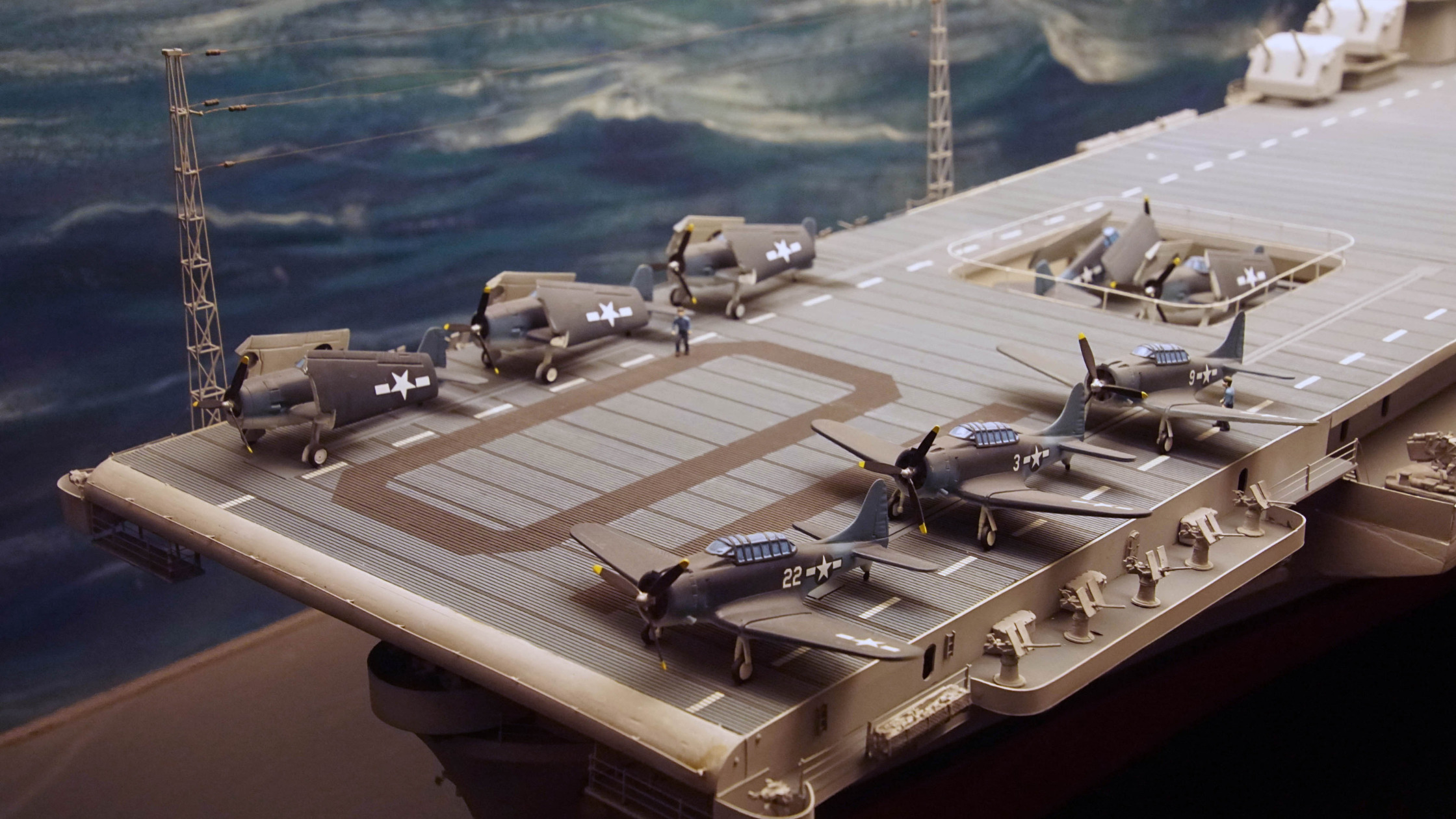
Geoffrey Pyke pitched his eccentric naval fantasy to Lord Mountbatten in late 1942 simply because the mid-Atlantic air cover gap was bleeding the Allies dry.
Standard shipyards were maxed out, so inventors looked straight at the ocean and the nearest lumber mill to bypass the steel bottleneck.
Pykrete possessed a stubborn structural tenacity, refusing to melt as quickly as normal ice thanks to wood fibers locking the crystal lattice.
Planners drew up blueprints for a floating island two thousand feet long, bristling with heavy artillery and deep freeze units.
Such absurd dimensions meant heavy bombers could finally land safely, closing the notorious air gap once and for all.
Engineers quickly realized that Project Habakkuk became WWII’s strangest ship idea because it thumbed its nose at every rule of naval architecture.
Building warships out of frozen sawdust sounded like a pub joke, yet initial lab tests shockingly proved the material could take a beating.
How Public Curiosity Kept the Frozen Fleet Alive
The strange legacy of wartime experimentation often lingers far beyond classified government archives, capturing the imagination of generations fascinated by alternative engineering.
Decades after the blueprints were burned and the ice models melted into Canadian lakes, people remain captivated by the sheer chutzpah of building warships out of sawdust.
Popular culture frequently resurrects the concept, turning a forgotten logistical failure into a legendary tale of desperate human ingenuity.
Modern engineering students still analyze the structural mechanics of pykrete in university classrooms, using the failed project as a cautionary yet inspiring case study.
It reminds modern designers that innovation requires more than theoretical brilliance; material limits and environmental factors will always have the final say.
When today’s creators face impossible constraints, looking back at eccentric historical proposals offers a refreshing perspective on thinking past conventional boundaries.
+ Die Schlacht um Athen: Als Veteranen des Zweiten Weltkriegs eine Stadt zurückeroberten
Why Did Pykrete Seem Like a Viable Naval Material?
Laboratory benches in Canada proved that adding wood pulp to ice transformed a brittle hazard into a remarkably resilient composite material.
Bullets fired at blocks of pykrete didn’t shatter the target; they just buried themselves quietly inside the frozen mass like a punch into a heavy bag.
Furthermore, the stuff melted at a frustratingly slow crawl, tricking strategists into dreaming of permanent Arctic installations.
Naval calculators figured that buried refrigeration coils would happily offset warm summer currents, keeping the hull rigid against the waves.
Production costs looked almost suspiciously low compared to traditional steel warships requiring months of specialized labor in crowded dockyards.
Workers could theoretically mold the mixture into any shape using simple wooden forms and industrial freezers.
Planners genuinely believed total war demanded breaking every rule in the physics textbook to crush German U-boat dominance.
+ How Operation Cottage Became WWII’s Strangest Allied Invasio
What Are the Core Specifications of the Proposed Ice Carrier?
| Specification Metric | Proposed Habakkuk Design | Standard Escort Carrier |
| Length (Feet) | 2,000 | 500 – 600 |
| Beam / Width (Feet) | 300 | 80 – 110 |
| Hull Thickness (Feet) | 40 | Steel plates (inches) |
| Displacement (Tons) | 2,200,000 | 10,000 – 25,000 |
| Primärmaterial | Pykrete (Ice & Wood Pulp) | Rolled Structural Steel |
Staring at these numerical metrics reveals the jaw-dropping scale of wartime ambition that gripped Allied engineering teams.
Moving a two-million-ton block of ice required an absurd propulsion system just to fight ocean currents and Arctic gales.
Keeping the massive structure stable demanded a relentless torrent of internal cooling power coursing through miles of embedded pipes.
Laut der Nationalarchiv, declassified paperwork shows that logistical quicksand swallowed the laboratory magic almost immediately.
Scaling up a tabletop experiment into a floating metropolis strained industrial sanity past its breaking point, forcing commanders back to gritty reality.
Why Did the Project Ultimately Fail and Get Cancelled?

Creep deformation turned out to be the quiet assassin that murdered the pykrete carrier before it ever saw saltwater.
Under sustained loads, ice refuses to stay put; it slowly sags and deforms, meaning a structural collapse was only a matter of time.
Powering the necessary refrigeration grid also demanded fuel supplies that completely defeated the strategic purpose of a self-sustaining island.
Meanwhile, conventional steel escort carrier production accelerated wildly by 1944, making floating glaciers look like expensive science projects. Long-range land-based patrol aircraft also finally bridged the Atlantic air gap without needing any frozen runways.
These accumulating headaches ensured that Project Habakkuk became WWII’s strangest ship idea to quietly disappear into a filing cabinet.
Looking back at such monumental miscalculations reminds modern builders that brilliant theories often collapse the moment they meet the messy laws of nature.
+ Die verschollene Expedition, die versehentlich Landesgrenzen neu zog
Abschluss
Pushing boundaries requires balancing wild imagination with cold, sober execution, yet history is littered with brilliant ideas that missed the mark.
Though this frozen leviathan never fired a shot in anger, it remains a monument to wartime desperation and stubborn ingenuity.
Modern professionals navigating their own complex projects can take quiet comfort in knowing that overambition is an old, deeply human habit.
Warum verstehen Project Habakkuk became WWII’s strangest ship idea teaches us to respect the friction between a clever blueprint and physical reality.
For a deeper dive into technical marvels that actually survived the drafting table, head over to Britannica and explore further.
Häufig gestellte Fragen
What was the main material used in Project Habakkuk? The core structure relied on pykrete, an unorthodox composite made of 88% ice and 12% wood pulp.
Why did inventors choose wood pulp for the ice mixture? Wood fibers dramatically increased impact resistance and slowed down the melting process compared to pure water ice.
Where was the prototype of the ice ship constructed? Engineers built a working scale model on Patricia Lake in Jasper National Park, Alberta.
How long was the proposed full-scale aircraft carrier? The final operational blueprint called for a staggering length of two thousand feet.
Why was the project cancelled before completion? Relentless structural sag under its own weight, heavy energy requirements, and the sudden abundance of conventional steel ships sealed its fate.