
When an Entire Capital City Was Relocated Overnight
In November 2005, a fleet of military trucks rolled out of Yangon under the cover of early morning darkness. Myanmar’s ruling junta did not announce their destination, nor did they prepare the public for what was coming.
Annúncios
Within a few chaotic hours, an entire capital city was relocated overnight, marking one of the most abrupt, surreal bureaucratic migrations in modern history.
For those of us working in highly volatile digital environments, observing these massive, forced reorganizations is more than just a historical curiosity.
It forces us to ask a difficult question: how do systems—and the people inside them—survive when the ground beneath them shifts without warning?
This analysis reconstructs the bizarre relocation to Naypyidaw, unpacks the quiet mechanics of its execution, and explores what this extreme logistical pivot teaches us about maintaining operational resilience when our own professional realities change in an instant.
Annúncios
What is the Story Behind Naypyidaw?
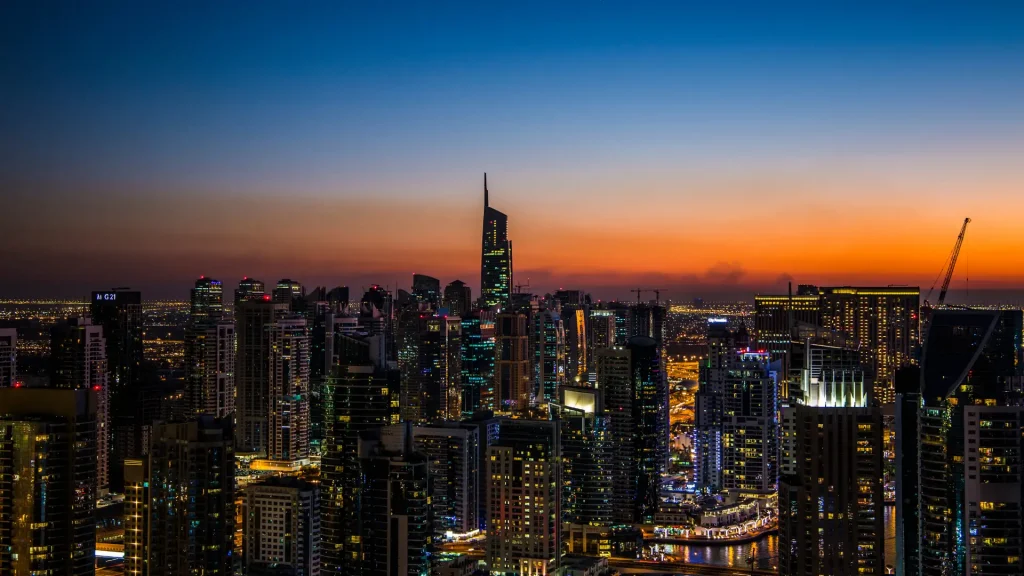
Before the move, Yangon was the undisputed heart of Myanmar—a dense, chaotic, and deeply historic coastal metropolis.
Yet, deep within the country’s central scrublands, thousands of laborers had spent three years secretly carving an alternative reality out of the malaria-prone jungle.
The military regime, operating under absolute secrecy, built an administrative zone of staggering proportions.
They cleared vast swaths of tropical forest and built empty government complexes, preparing a fallback position far from the prying eyes of the domestic population and foreign observers alike.
When the moving orders finally came, they were absolute. Government workers were given hours to pack up decades of archives, computers, and lives into crates.
Convoys of trucks immediately headed north toward a nameless, half-finished settlement.
In early 2006, during a massive military parade, this artificial city was officially christened Naypyidaw, which translates to “Abode of Kings.”
The title felt strangely archaic for a city designed with zoned sectors, reliable high-speed fiber cables, and massive residential grids.
Yet, despite its state-of-the-art design, the city remains an eerie monument to isolation.
It is a metropolis built for millions but populated largely by bureaucrats, featuring sprawling, empty multi-lane highways where the silence is almost physical.
Why Did Myanmar Relocate Its Capital So Suddenly?
The official narrative pointed to defense, with strategists arguing that Yangon’s coastal position made it an easy target for a foreign naval invasion.
Moving the administrative brain of the country deep inland behind mountain ranges offered an immediate tactical shield.
But there is a deeper historical subtext at play. Throughout Burmese history, dynastic rulers routinely built new capitals to mark the beginning of their reigns and shed colonial influences.
The military junta was essentially modernizing this ancient, isolationist ritual.
There is also the undeniable influence of superstition. Rumors persist that state leaders, deeply influenced by personal astrologers, were warned of impending disaster if an entire capital city was relocated overnight to align with auspicious cosmic coordinates.
Perhaps the most practical reason was crowd control.
Yangon was a hotbed of political dissent and student protests; by scattering the civil service across a desolate, highly monitored jungle zone, the regime effectively insulated itself from civil unrest.
++ Kisah Pelik Kapsul Masa yang Terkubur Selama 5,000 Tahun
How Does a Country Move an Entire Capital Overnight?
Executing a move of this scale without a public vote requires a level of executive force that borders on the absurd.
Thousands of public servants arrived at work only to be told they were moving to a wilderness with zero local schools, hospitals, or operational shops.
The transition was managed like a military offensive, with strict information blackouts keeping foreign embassies completely in the dark until the physical move was already underway.
This clinical execution prioritized speed over human comfort.
To understand the sheer logistical friction of the early days, the Encyclopaedia Britannica article on Nay Pyi Taw offers a vivid look at how the city’s early phases suffered from a severe lack of basic utilities and residential housing.
Estimates on the financial toll of this project are staggering, with experts calculating that the regime spent upwards of $4 billion to $5 billion USD—a crushing sum for a country that was, at the time, struggling with widespread poverty.
| Attribute | Yangon (Former Capital) | Naypyidaw (Current Capital) |
| Official Relocation Year | Served until 2005 | Proclaimed in 2006 |
| Total Land Area | Approx. 598 km² | Approx. 7,054 km² |
| Primary Relocation Reason | Crowded, coastal vulnerability | Central defense, political control |
| Estimated Construction Cost | Established historically | $4 to $5 Billion USD |
| General Population Density | Extremely high urban density | Low, vast suburban sprawl |
Which Other Countries Have Shifted Their Capitals?
While Myanmar’s method was uniquely aggressive, the urge to build a clean-slate capital is a recurring theme in global geopolitics, often driven by a desire to balance internal regional tensions.
Brazil famously did this in 1960, abandoning coastal Rio de Janeiro for Brasília, an ultra-modernist city carved out of the country’s central highlands. The move aimed to draw economic growth away from the saturated coast and populate the interior.
Nigeria followed a similar playbook in 1991, moving its capital from Lagos to Abuja.
Lagos was congested, polluted, and dominated by specific ethnic groups; Abuja offered a centrally located, neutral ground for a diverse population.
Kazakhstan likewise abandoned Almaty in 1997, moving its capital north to Astana.
This was a calculated move to secure the country’s northern borders and position the government closer to crucial industrial trade routes.
++ Kapal Yang Mengelilingi Dunia Tanpa Niat Untuk
Why Do Modern Governments Fear Coastal Vulnerability?
Modern states increasingly view coastal administrative hubs as strategic liabilities in an era of rapid technological warfare. Rising sea levels and naval blockade threats force strategic planners to look inland for safety.
This defensive anxiety explains why an entire capital city was relocated overnight to the mountainous interior of Myanmar. Geopolitical survival often demands sudden, drastic geographical sacrifices.
How Does Top-Down Planning Stifle Organic Urban Culture?
Great cities grow organically over centuries through spontaneous human interactions, trade, and cultural exchange. When bureaucrats attempt to manufacture a metropolis from blueprints, they usually build sterile, lifeless monuments.
The eerie quiet of Naypyidaw proves that even if an entire capital city was relocated overnight, you cannot easily transplant the vibrant soul of a historic community.
Why Do Modern Governments Fear Coastal Vulnerability?
Modern states increasingly view coastal administrative hubs as strategic liabilities in an era of rapid technological warfare. Rising sea levels and naval blockade threats force strategic planners to look inland for safety.
How Does Top-Down Planning Stifle Organic Urban Culture?
Great cities grow organically over centuries through spontaneous human interactions, trade, and cultural exchange. When bureaucrats attempt to manufacture a metropolis from blueprints, they usually build sterile, lifeless monuments.
The eerie quiet of Naypyidaw proves that even if an entire capital city was relocated overnight, you cannot easily transplant the vibrant soul of a historic community.
++ Rompakan Bank Yang Mencetuskan Protes Kebangsaan
What are the Professional Lessons of Large-Scale Reorganization?
There is a striking parallel between a state relocating its capital and a professional navigating a sudden disruption.
Whether it is a sudden market crash, a massive shift in technology, or a sudden loss of a primary client, we all face moments where our operational foundations are uprooted.
When the state decided to move, they did not wait for perfect conditions; they secured their core files, set up basic communications, and kept the machinery running.
In your own career, survival during transitions relies on identifying and protecting your most critical professional assets first.
Flexibility is not just a soft skill; it is a structural necessity. Freelancers and remote workers who rely on a single platform, a single tool, or a single market are highly vulnerable to sudden structural shifts.
Building a decentralized, mobile business model ensures that no matter where the “capital” of your industry moves, your operations can pack up, adapt, and resume functioning without missing a beat.
The sudden rise of Naypyidaw serves as a stark reminder that even the most established systems can be redesigned without warning.
While we might not have to move our physical lives to a jungle overnight, the ability to pivot our careers with speed and precision remains the ultimate competitive advantage.
To stay resilient, we must continuously audit our tools, diversify our networks, and remain willing to build anew.
Keep up with how shifting global realities and economic landscapes continue to reshape our professional world by following the BBC World News Portal.
Soalan Lazim
Why do governments decide to build completely new capital cities?
Governments usually build new capitals to escape urban congestion, stimulate growth in undeveloped inland regions, protect administrative assets from coastal attacks, or establish a politically neutral center in culturally divided nations.
How did families cope with the abrupt move to Naypyidaw?
The transition was highly disruptive. Because the new capital initially lacked schools, medical facilities, and recreational spaces, many civil servants had to leave their families behind in Yangon for years.
Is Naypyidaw still empty today?
While its population has grown slightly over the years, it remains remarkably quiet. The city’s massive scale, wide roads, and spread-out zones mean it lacks the organic street life and density of traditional capitals.
What is the most unique architectural feature of Naypyidaw?
The city is famous for its 20-lane highway, which was designed to double as an emergency runway for military aircraft in the event of an invasion or major civil conflict.