
雅典之戰:二戰老兵奪回一座城鎮
Democracy often feels like a abstract concept until local institutions fail completely. In August 1946, returning American soldiers faced systemic corruption inside McMinn County, Tennessee, proving that civic duty requires immediate courage.
廣告
Understanding historical resistance offers modern professionals valuable perspectives on ethics, leadership, and community accountability.
We will analyze how small-town political oppression triggered an armed rebellion, detailing key events, historical context, and enduring democratic principles.
仔細觀察 The Battle of Athens reveals how ordinary citizens restored honest governance. Explore this comprehensive guide covering background factors, election night tactics, structural outcomes, and essential lessons for modern civic engagement.
What Is the Historical Background of McMinn County’s Political Crisis?
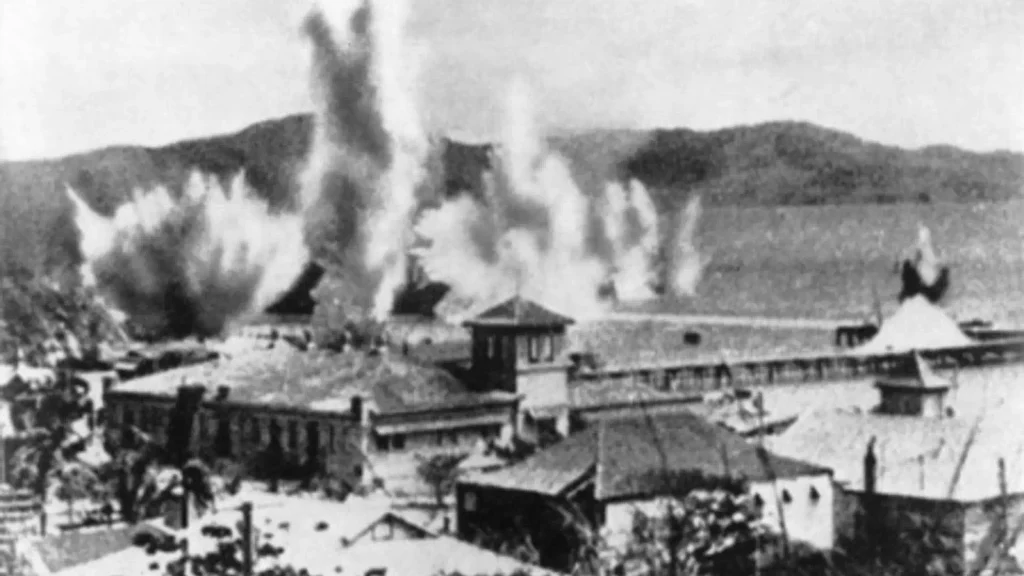
Sheriff Paul Cantrell established a predatory political machine throughout McMinn County during the early 1940s. Local deputies systematically targeted citizens with bogus fee-based arrests to generate personal profit and enforce absolute political dominance.
廣告
Deprived of fair choices, residents endured stolen local elections for years without legal recourse. Local courts ignored official complaints, while state politicians turned a blind eye to widespread ballot tampering and voter intimidation tactics.
Returning World War II veterans recognized this tyrannical environment immediately upon arriving home. Having fought fascism overseas, these battle-hardened young men refused to tolerate institutionalized corruption within their own American hometown.
Forming a nonpartisan political ticket, former servicemen organized to challenge the corrupt machine during the August 1946 primaries. Their campaign prioritized fair election monitoring, transparent local taxation, and law enforcement accountability.
What Is the Significance of the Battle of Athens Today?
The Battle of Athens remains a rare historical example of American citizens using armed resistance to successfully overthrow a corrupt local government and restore democratic integrity.
For modern professionals, civic leaders, and remote workers operating in decentralized environments, the event offers profound lessons in organizational ethics, active oversight, and collective accountability.
It highlights that institutional health depends not merely on formal systems, but on the willingness of individuals to stand up against systemic abuse and safeguard transparent practices.
Why Did Armed Conflict Erupt During the August 1946 Election?
Tensions spiked dramatically on August 1, 1946, as citizens gathered to cast ballots across Athens, Tennessee. Armed deputies routinely harassed voters, beat nonpartisan poll observers, and confiscated several crucial ballot boxes.
Recognizing blatant election fraud underway, deputies locked themselves inside the local jail with confiscated voting containers. Veterans demanded lawful access to observe the official vote tally, but county guards opened fire unexpectedly.
Surrounding the brick jailhouse, hundreds of former soldiers retrieved military rifles to defend voting integrity. The Battle of Athens escalated rapidly into an intense, overnight armed siege that shocked state authorities.
Strategically deploying dynamite against the reinforced entryway, veterans breached the stronghold shortly after midnight. Corrupt officials surrendered immediately, leaving the untampered ballot boxes intact for an honest public recount.
Key Overview of the McMinn County Rebellion
| Historical Event Element | Specific Historical Fact / Detail | 現代意義 |
| Primary Location | Athens, McMinn County, Tennessee | Local governance matters |
| Core Conflict Date | August 1–2, 1946 | Immediate action against fraud |
| Key Group Involved | GI Non-Partisan League | Organized community defense |
| Primary Catalyst | Armed ballot box seizure by deputies | Safeguarding voting integrity |
| Immediate Outcome | Corruption defeated; GIs elected | Restoration of lawful process |
What Long-Term Impact Did the McMinn County Uprising Have on Local Governance?
The resolution of the Battle of Athens led to the immediate collapse of Sheriff Paul Cantrell’s political machine, ushering in structural reforms across McMinn County.
The GI Non-Partisan League enacted immediate measures to dismantle the predatory fee system, ensuring law enforcement officers were paid fixed salaries rather than incentives based on arbitrary arrests.
Beyond Tennessee, the uprising sent a powerful signal across post-WWII America about the limits of local political bossism, serving as an enduring historical example of citizens holding entrenched municipal authorities accountable to democratic standards.
What Impact Did the Armed Siege Have on Post-WWII Law Enforcement Reforms?
The armed siege at the McMinn County jail catalyzed a nationwide re-examination of localized police powers and the predatory “fee system” during the post-WWII era.
By exposing how financial incentives drove corrupt law enforcement officers to abuse arrest powers for personal profit, the event accelerated efforts toward professionalizing municipal police departments.
State legislatures across the country increasingly moved away from fee-based deputy compensation, adopting standardized salaries, formal police training, and stricter administrative oversight to prevent local law enforcement from operating as private political enforcement arms.
How Did WWII Veterans Restore Order and Democratic Institutions?

Establishing temporary governance immediately after the surrender, veterans prevented widespread looting and retaliation. A citizen committee secured public property while organizing a transparent, public tally of every captured election ballot.
Official counts confirmed overwhelming victories for the GI Non-Partisan League candidates across all contested county positions.
Knoxville historian records preserved at the Tennessee State Library and Archives detail how peaceful civilian operations resumed within forty-eight hours.
Newly elected leaders reformed the local sheriff’s department by abolishing corrupt fee-based law enforcement incentives. Public funds were restored to public infrastructure, restoring local business confidence and community stability throughout the region.
Revisiting these historical events demonstrates that active civic oversight remains crucial for preventing institutional decay. Ethical standards demand constant vigilance, whether managing local municipalities, digital enterprises, or decentralized professional networks.
What Are the Lasting Democratic Lessons for Modern Professionals?
Unchecked authority inevitably breeds corruption whenever public oversight grows complacent or passive. History proves that institutional integrity depends directly on courageous individuals willing to enforce accountability within their working environments.
Collaborative action enables distributed groups to overcome entrenched political or corporate monopolies efficiently.
Former soldiers succeeded because they maintained unified communication, clear operational objectives, and unwavering commitment to democratic principles.
Ethical governance requires continuous participation rather than occasional outrage during crisis moments. Modern digital workers, freelancers, and civic leaders must proactively safeguard transparency within their respective professional communities.
結論
The Battle of Athens stands as an extraordinary historical reminder that sovereign power belongs ultimately to the people. When legal avenues failed, veterans used tactical precision to restore democratic legitimacy and honest municipal governance.
Preserving ethical standards requires active participation across every level of society today. By studying historical precedents, modern remote professionals and community leaders gain valuable insights into organizational accountability, structural integrity, and civic duty.
To review original government records and historical documentation, research the 美國國家檔案館 preserved political history collections.
常見問題解答
What was the main cause of the rebellion?
Rampant police corruption, voter intimidation, and fraudulent ballot seizures by Sheriff Paul Cantrell’s deputies triggered the armed civilian response in August 1946.
Was anyone killed during the armed siege?
Remarkably, no fatalities occurred during the violent overnight standoff, though several individuals suffered gunshot injuries before corrupt deputies surrendered the ballot boxes.
How did the federal government respond afterward?
Federal authorities investigated the incident but declined to file criminal charges, recognizing that veterans acted to restore lawful election outcomes after local channels failed.