The Ship That Circumnavigated the Globe Without Intending To
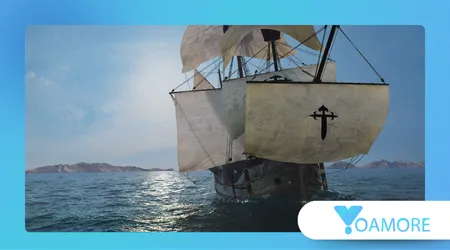
The story of the ship that circumnavigated the globe by accident remains one of history’s most bizarre maritime anomalies.
Anúncios
This article explores the unexpected journey of HMS Dolphin, uncovering the strategic decisions, technological breakthroughs, and historical impacts of its unintentional voyage.
This unplanned odyssey serves as a striking reminder that history is rarely a neat sequence of intended events.
While imperial powers traditionally mapped every coordinate with strict geopolitical ambitions, the crew of the Dolphin had to reinvent their purpose mid-ocean, relying on instinct and engineering fixes rather than official Admiralty charts to survive.
There is something deeply compelling about how close this expedition came to vanishing entirely into maritime obscurity.
Anúncios
Instead of turning back to risk certain wreckage against the unforgiving Atlantic currents, the decision to plunge westward into the uncharted Pacific effectively redrew the maps of the era, shifting the entire trajectory of British naval doctrine.
Summary of What You Will Learn
- The Accidental Pioneer: The historical context behind the unintended voyage of HMS Dolphin.
- Navigational Breakthroughs: How early scientific instruments inadvertently forced a global route.
- Geopolitical Impacts: The lasting territorial changes caused by this specific maritime journey.
- Legacy of HMS Dolphin: Why this voyage reshaped British naval strategy forever.
What Is the Story Behind the Ship That Circumnavigated the Globe Unintentionally?
In the annals of maritime history, exploration was typically meticulous, driven by royal charters, detailed maps, and specific commercial destinations.
However, the Royal Navy frigate HMS Dolphin, under the command of Commodore John Byron, achieved global renown through sheer circumstantial necessity.
Launched primarily for secret territorial scouting in the South Atlantic, the vessel faced relentless weather and logistical crises.
These extreme challenges forced the crew to press forward into the Pacific Ocean, establishing an unplanned global path.
This incredible journey was never a planned expedition for geographic glory, yet it redefined British maritime capabilities during the mid-18th century.
By modern standards, the voyage represents a masterclass in emergency navigation and survival under pressure.
Historians often study this specific journey to understand how tactical desperation can lead to monumental geographic achievements.
The crew survived uncharted waters, unpredictable indigenous encounters, and severe supply depletion before returning home safely.
+ The World War That Almost Started Over a Pig (Pig War)
How Did a Secret Mission Turn Into a Global Voyage?
The original Admiralty orders for HMS Dolphin focused strictly on locating Falkland Islands bases and discovering a Northwest Passage.
However, severe Atlantic storms battered the wooden hull, making a return journey against the wind virtually impossible.
Faced with structural failure and dwindling rations, Byron made the executive decision to navigate through the hazardous Strait of Magellan. This maneuver pushed the copper-sheathed vessel directly into the vast expanse of the Pacific Ocean.
Once inside the Pacific, the prevailing trade winds prevented the heavy frigate from turning back toward European waters.
The only viable survival strategy required sailing westward, utilizing familiar trade routes near Asia to return home safely.
This pivot transformed a localized reconnaissance mission into an epic, accidental journey around the entire planet. The strategic choice highlighted the limitations of 18th-century meteorological knowledge and ship maneuverability under duress.
According to documented naval archives preserved by the National Maritime Museum, this voyage marked the first time a vessel utilized copper sheathing for such prolonged periods.
This technological feature protected the hull from destructive marine worms during the unexpected tropical transit.
Why Is the HMS Dolphin Crucial to Maritime History?
The legacy of HMS Dolphin extends far beyond the sheer physical distance covered by its weary crew. This vessel became the first ship to complete two consecutive circumnavigations, completing its second trip under Samuel Wallis.
The data collected during these accidental journeys laid the groundwork for James Cook’s subsequent, highly organized Pacific explorations.
It proved that British ships could endure extended global deployments without losing the entire crew to disease.
Furthermore, the accidental route led to the European charting of several islands, including Tahiti, during the second voyage. These discoveries altered global geopolitics, igniting a fierce colonial rivalry between Great Britain, France, and Spain.
The accidental nature of the initial voyage demonstrated that global mobility was now possible for standard military vessels. It shifted British naval policy from regional dominance toward a truly global maritime empire.
+ The Microculture of Informal Translators in Multilingual Cities
What Key Data Defines This Historic Unintended Journey?
Understanding the precise scale of this maritime achievement requires analyzing the logistical metrics of the historical voyage. The numbers illustrate the sheer endurance required by the sailors under Byron’s command.
The table below provides a factual overview of the operational parameters during this incredible global journey.
| Voyage Parameter | Historical Factual Data |
| Departure Date | June 21, 1764 |
| Return Date | May 9, 1766 |
| Total Duration | 1 year, 10 months, 18 days |
| Vessel Length | 113 feet (34.4 meters) |
| Crew Complement | Approximately 150 men |
| Primary Innovation | Experimental Copper Sheathing |
These metrics reveal how efficiently the vessel covered massive distances despite lacking modern navigational equipment. The low mortality rate among the crew also set a new standard for long-distance naval operations.
Which Navigational Challenges Did the Crew Overcome?
The sailors on this ship that circumnavigated the globe faced immense technological limitations that modern navigators would find terrifying.
Scurvy, a devastating vitamin C deficiency, threatened to incapacitate the crew during long stretches without fresh provisions.
Byron strictly enforced dietary regimes, utilizing portable soup and sour kraut to keep his men remarkably healthy. This health management was revolutionary for the era, preserving operational capacity throughout the trip.
“Our preservation was due to constant cleanliness, fresh air, and the liberal use of anti-scorbutics.”
Another significant hurdle involved calculating longitude accurately while traversing completely unmapped portions of the Pacific Ocean.
The crew relied heavily on dead reckoning and rudimentary astronomical observations to estimate their global position.
One minor calculation error could have steered the wooden frigate into dangerous coral reefs, ending the mission catastrophically. Their safe return is a testament to extraordinary seamanship under pressure.
+ The Lost City of Cahokia: America’s Forgotten Metropolis
When Did the World Realize the Impact of This Voyage?
Public recognition of the achievement occurred rapidly after HMS Dolphin dropped anchor in the Downs in 1766.
The British Admiralty immediately classified the detailed logbooks, recognizing the immense strategic value of the new Pacific charts.
As rumors leaked into London society, intellectual circles began debating the geopolitical future of the Pacific. This sudden awareness sparked an era of competitive exploration that reshaped global borders permanently.
By the late 18th century, published accounts of Byron’s voyage became literary sensations across Western Europe. Scholars realized that the Pacific Ocean was not an empty void but a region filled with strategic potential.
The accidental voyage effectively ended the era of isolated regional exploration, ushering in the modern age of global maritime connectivity. Today, historians view it as a pivotal turning point in human geography.
The remarkable journey of HMS Dolphin proves that the most profound historical discoveries often occur by accident.
By transforming a tactical crisis into a global triumph, the crew expanded the boundaries of the known world.
For more verified historical insights into forgotten maritime achievements, explore the digital archives at the British Library, which preserves the original journals of early global explorers.
Frequently Asked Questions
Was HMS Dolphin intended to sail around the world?
No, the original mission was strictly limited to South Atlantic exploration and looking for a Northwest Passage. Severe weather and tactical limitations forced the captain to cross into the Pacific.
How many times did HMS Dolphin circumnavigate the earth?
The vessel completed two separate circumnavigations. The first occurred under Commodore John Byron, and the second was commanded by Samuel Wallis just months later.
What technological innovation helped the ship survive?
The vessel was one of the earliest to utilize experimental copper sheathing on its wooden hull. This prevented damage from wood-boring shipworms in warm tropical waters.
How did the crew prevent major outbreaks of scurvy?
Commodore Byron enforced strict hygiene standards and introduced innovative dietary supplements like sour kraut and portable broth. This kept the crew healthy during long sea transits.