
Mehrsprachige Haushalte der 2020er Jahre: Verbindung von Tradition und Moderne

Der Aufstieg von Mehrsprachige Haushalte der 2020er Jahre Dies stellt einen tiefgreifenden kulturellen Wandel in der Art und Weise dar, wie moderne Familien kommunizieren, sich vernetzen und sich auf eine globalisierte Zukunft vorbereiten. Es geht nicht mehr nur um die Bewahrung des kulturellen Erbes.
Anzeigen
Heute ist der Spracherwerb eine bewusste Lebensstilentscheidung. Eltern in den Vereinigten Staaten und Europa gestalten aktiv Umgebungen, in denen zwei oder mehr Sprachen gleichzeitig gedeihen.
Dieser Trend geht über die Einwanderungsstatistik hinaus. Immer mehr englische Muttersprachler bringen ihren Kindern Mandarin, Spanisch oder Französisch bei, um die kognitive Flexibilität und das kulturelle Einfühlungsvermögen zu fördern.
Wir erleben eine einzigartige Verbindung von Tradition und modernen Bildungstechnologien. Familien meistern diesen Weg mit einer Mischung aus althergebrachter Disziplin und innovativer digitaler Unterstützung.
Inhaltsverzeichnis
Anzeigen
- Was kennzeichnet die neue Welle mehrsprachiger Familien?
- Warum legen Eltern im Jahr 2026 so großen Wert auf Zweisprachigkeit?
- Wie hat die Technologie das Sprachenlernen zu Hause revolutioniert?
- Welchen realen Herausforderungen stehen Familien heute gegenüber?
- Welche Strategien eignen sich am besten für moderne Haushalte?
- Häufig gestellte Fragen zur Erziehung mehrsprachiger Kinder
Was kennzeichnet die neue Welle mehrsprachiger Familien?
Die demografische Zusammensetzung hat sich seit Beginn des Jahrzehnts deutlich verändert. Mehrsprachige Haushalte der 2020er Jahre zeichnen sich durch Vielfalt im Ursprung und Intentionalität in der Praxis aus.
Laut Volkszählung spricht jeder fünfte US-Einwohner zu Hause eine andere Sprache als Englisch. Die Gründe für diese Statistik haben sich jedoch rasant verändert.
Diejenigen, die eine Sprache ihrer Herkunft sprechen, bilden weiterhin eine wichtige demografische Gruppe, die sich bemüht, ihre angestammten Sprachen am Leben zu erhalten. Gleichzeitig wächst jedoch das Segment der „wahlweise Zweisprachigen“, die sich aus akademischen Gründen für das Immersionslernen entscheiden.
Interkulturelle Ehen erfreuen sich ebenfalls so großer Beliebtheit wie nie zuvor. Diese Verbindungen schaffen naturgemäß Umgebungen, in denen mehrere Sprachen für die Kommunikation mit den erweiterten Familienmitgliedern notwendig sind.
Soziologen beobachten, dass diese Haushalte der globalen Bürgerschaft Priorität einräumen. Die Kinder werden so erzogen, dass sie die Welt durch verschiedene sprachliche Filter betrachten, was ein tieferes Verständnis für Nuancen fördert.
Dadurch entsteht innerhalb des Elternhauses eine „dritte Kultur“. Es ist ein Raum, in dem sprachliche Codes fließend ineinander übergehen und so ein einzigartiger Familiendialekt entsteht, der die Familienmitglieder miteinander verbindet.
+ Wie die Generation Alpha die Kindheitskultur neu definiert
Warum legen Eltern im Jahr 2026 so großen Wert auf Zweisprachigkeit?
Wirtschaftliche Unsicherheit und globale Vernetzung beeinflussen viele dieser Entscheidungen. Eltern verstehen, dass die Arbeitswelt der 2030er Jahre nahtlose interkulturelle Kommunikationsfähigkeiten erfordern wird.
Die Neurowissenschaft bestätigt diese Erkenntnisse immer wieder. Studien zeigen übereinstimmend, dass zweisprachige Gehirne überlegene exekutive Funktionen, bessere Problemlösungsfähigkeiten und eine verbesserte Fähigkeit zur Filterung von Ablenkungen aufweisen.
Im Zeitalter der Informationsflut sind diese kognitiven Vorteile wertvolle Ressourcen. Ein Kind in Mehrsprachige Haushalte der 2020er Jahre ist eine Investition in ihre geistige Beweglichkeit.
Kulturerhalt bleibt ein starker Antrieb. Für Diaspora-Gemeinschaften ist die Sprache das stärkste Bindeglied zur Identität, zur Geschichte und zu entfernten Verwandten, die möglicherweise kein Englisch sprechen.
Auch emotionale Intelligenz spielt eine Rolle. Das Erlernen einer zweiten Sprache fördert Empathie, indem es den Sprecher dazu zwingt, unterschiedliche Perspektiven und kulturelle Kontexte intuitiv zu verstehen.
Der Zugang zu Fernarbeit ermöglicht es Familien, freier zu reisen. Dieser Lebensstil als „digitaler Nomade“ erfordert Sprachkenntnisse für das praktische Überleben und die soziale Integration in verschiedenen Ländern.
Wie hat die Technologie das Sprachenlernen zu Hause revolutioniert?
Wir haben uns weit über einfache Karteikarten hinausentwickelt. Das digitale Ökosystem des Jahres 2026 bietet immersive Erlebnisse, die die Minderheitensprache für Digital Natives zugänglich und ansprechend machen.
KI-gestützte Tutoren können nun natürliche Gespräche mit Kindern führen. Diese Tools passen sich dem Sprachniveau des Kindes an und korrigieren Grammatik und Aussprache in Echtzeit und ohne zu urteilen.
Streaming-Plattformen ermöglichen den Zugang zu hochwertigen Inhalten in nahezu jeder Sprache. Kinder können ihre Lieblingssendungen auf Spanisch oder Japanisch ansehen und so den Klang der jeweiligen Sprache normalisieren.
Augmented-Reality-Apps (AR-Apps) blenden Vokabeln in die reale Welt ein. Ein Kind richtet ein Tablet auf einen Tisch, und das Gerät spricht das Wort in der Zielsprache aus.
Videoanrufe verbinden Kinder täglich mit ihren Großeltern. Diese digitale Brücke sorgt dafür, dass die Herkunftssprache einen praktischen, emotionalen Zweck erfüllt und nicht nur eine akademische Pflicht ist.
Experten warnen jedoch vor passivem Konsum. Pew-Forschungszentrum stellt fest, dass Bildschirmzeit zwar hilfreich ist, die menschliche Interaktion aber nach wie vor der Goldstandard für wahre Sprachgewandtheit und Behaltensleistung ist.
Interaktives Gaming verbindet Gleichaltrige weltweit. Ein Teenager in Ohio kann in einem Videospiel mit Teamkollegen in Seoul einen Überfall koordinieren und dabei auf Koreanisch kommunizieren.
Welchen realen Herausforderungen stehen Familien heute gegenüber?
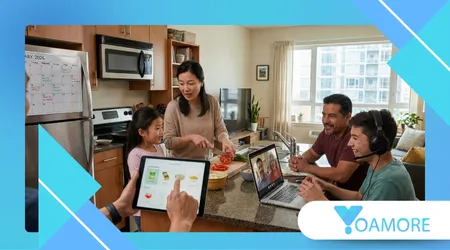
Trotz aller Hilfsmittel verläuft der Weg selten reibungslos. Die „Mehrheitssprache“ (meist Englisch) übt immensen Druck aus und führt oft dazu, dass die Minderheitensprache verdrängt wird, sobald das Kind eingeschult wird.
Die größte Hürde ist die Konstanz. Erschöpfte Eltern greifen oft auf die einfachste Kommunikationsform zurück und signalisieren damit ungewollt, dass die Minderheitensprache weniger wichtig ist.
Dieses Phänomen wird in Extremfällen als „Semilingualismus“ bezeichnet. Es tritt auf, wenn ein Kind keine der beiden Sprachen vollständig beherrscht, wobei diese Befürchtung oft übertrieben ist.
Soziale Stigmatisierung kann in bestimmten Bereichen weiterhin bestehen. Während Zweisprachigkeit in kosmopolitischen Zentren geschätzt wird, üben einige Gemeinschaften nach wie vor Druck auf Familien aus, sich zu „assimilieren“ und nur noch Englisch zu sprechen.
Es ist ebenfalls schwierig, geeignete Ressourcen zu finden. Während spanische und chinesische Materialien in Hülle und Fülle vorhanden sind, haben Familien, die Sprachen mit weniger Sprechern sprechen, Schwierigkeiten, qualitativ hochwertige Lerninhalte zu finden.
Die nachstehende Tabelle verdeutlicht die deutlichen Unterschiede hinsichtlich Ressourcen und Erfolgsquoten in Abhängigkeit von der Art des Sprachkontakts im Elternhaus.
+ „Stan-Kultur“ und ihr Einfluss auf Sprache und Identität
Tabelle 1: Wahrscheinlichkeit für Sprachkontakt vs. Sprachbeherrschung
| Familienstrategie | Primärmethode | Ressourcenverfügbarkeit | Wahrscheinlichkeit der aktiven Flüssigkeit |
| OPOL (Ein Elternteil, eine Sprache) | Jeder Elternteil spricht ausschließlich eine Sprache. | Hoch (Erfordert Disziplin) | 75% – Sehr effektiv, wenn konsequent. |
| mL@H (Minderheitensprache zu Hause) | Zuhause ist ausschließlich die Sprache der Herkunftssprache reserviert. | Mittel (Erfordert Zustimmung der Familie) | 85% – Höchste Erfolgsquote. |
| Zeit und Ort | Sprache, die nur zu bestimmten Zeiten/an bestimmten Orten verwendet wird. | Niedrig (kontextabhängig) | 40% – Führt oft zu passivem Verständnis. |
| Gemischte Mischung | Unstrukturierter Sprachwechsel. | Variable | 30% – Hohes Risiko der Dominanz von „Spanglish“. |
Welche Strategien eignen sich am besten für moderne Haushalte?
Erfolgreich Mehrsprachige Haushalte der 2020er Jahre Sprache wird oft als Notwendigkeit und nicht als Hobby betrachtet. Es wird eine Umgebung geschaffen, in der das Kind Bedürfnisse die Sprache zum Funktionieren bringen.
Die Methode „Ein Elternteil, eine Sprache“ (OPOL) ist nach wie vor beliebt. Sie schafft eine klare Verbindung zwischen einer bestimmten Person und einer Sprache und reduziert so die Verwirrung beim Kind.
Alternativ dazu ist das Konzept „Minderheitensprache zu Hause“ (mL@H) sehr effektiv. Die gesamte Familie spricht innerhalb des Hauses die Zielsprache und wechselt nur außerhalb des Hauses zur Gemeinschaftssprache.
Gemeinschaftsbildung ist unerlässlich. Eltern organisieren „Sprachspieltreffen“, bei denen Kinder mit Gleichaltrigen interagieren, die dieselbe Minderheitensprache sprechen, wodurch deren sozialer Nutzen bestätigt wird.
Reisen ist der ultimative Lernbeschleuniger. Die Sommer im Heimatland zu verbringen, bietet ein „Sprachbad“, das die Sprachkenntnisse oft in zwei Monaten stärker fördert als ein ganzes Studienjahr.
Vorlesen ist eine unverzichtbare Gewohnheit. Der Aufbau einer Bibliothek mit Büchern in der Zielsprache setzt Kinder mit einem komplexen Wortschatz in Kontakt, den sie im alltäglichen Gespräch selten hören.
Geduld ist die letzte Strategie. Der Spracherwerb ist ein Marathon, gekennzeichnet durch Höhen und Tiefen sowie gelegentliche Rebellionen, die Eltern mit Feingefühl meistern müssen.
+ Die Wiederbelebung des Vintage-Slangs unter Digital Natives
Abschluss
Die Familienlandschaft verändert sich. Mehrsprachige Haushalte der 2020er Jahre Sie beweisen, dass Identität nicht singulär ist und Kommunikation nicht auf eine Sprache beschränkt ist.
Diese Reise erfordert Hingabe, Einfallsreichtum und die Bereitschaft, Unvollkommenheit zu akzeptieren. Es ist ein komplexer, aber wunderschöner Prozess, der Brücken zwischen Generationen und Regionen schlägt.
Im Laufe dieses Jahrzehnts erweitert sich die Definition von Literalität. Sie umfasst die Fähigkeit, sich respektvoll und fließend in verschiedenen kulturellen Codes zu bewegen.
Für Eltern, die diesen Weg einschlagen, sind die Belohnungen immens. Sie geben ihren Kindern die Schlüssel zu einer größeren, stärker vernetzten Welt.
Nimm die Herausforderungen an und feiere die kleinen Erfolge. Jeder Satz, der in der Herkunftssprache gesprochen wird, ist ein Triumph der Verbundenheit über die Assimilation.
Wenn Sie nach weiteren Ressourcen zur Sprachentwicklung suchen, Zentrum für Angewandte Linguistik bietet hervorragende Forschungsergebnisse und praktische Ratgeber für Familien.
FAQ: Häufig gestellte Fragen
Führt die zweisprachige Erziehung eines Kindes zu Sprachverzögerungen?
Nein, das ist ein hartnäckiger Mythos. Zwar beginnen zweisprachige Kinder manchmal etwas später zu sprechen, aber sie liegen dennoch im normalen Entwicklungsbereich und holen schnell auf.
Ist es zu spät, damit anzufangen, wenn mein Kind bereits 7 Jahre alt ist?
Es ist nie zu spät. Zwar liegt die „kritische Phase“ für eine muttersprachliche Aussprache im jüngeren Kindesalter, doch ältere Kinder können sich besser konzentrieren und Grammatikregeln schneller erlernen.
Was ist, wenn ich die zweite Sprache nicht fließend beherrsche?
Sie können das Lernen weiterhin unterstützen. Lernen Sie gemeinsam mit Ihrem Kind, engagieren Sie Nachhilfelehrer oder nutzen Sie Sprachkurse. Ihre Einstellung zur Sprache ist wichtiger als Ihre Perfektion.
Wie gehe ich damit um, wenn mein Kind sich weigert, die Sprache zu sprechen?
Das ist normal. Sprechen Sie weiterhin in der Sprache mit ihnen, aber erzwingen Sie keine Antwort. Halten Sie die Kommunikation konstant, und die Reaktion wird schließlich erfolgen.
Kann ein Kind drei Sprachen gleichzeitig lernen?
Ja, Dreisprachigkeit ist weltweit verbreitet. Wichtig ist, die mit den einzelnen Sprachen verbundenen Kontexte oder Personen klar zu trennen, um das Kind nicht zu überfordern.
Was ist die „Stille Periode“?
Dies ist eine Phase, in der das Kind zuhört, aber noch nicht spricht. Es verarbeitet die neuen Laute und Regeln. Dies ist ein wichtiger Teil des Lernprozesses.