
The Forgotten Atomic Bomb Test That Changed the Sahara
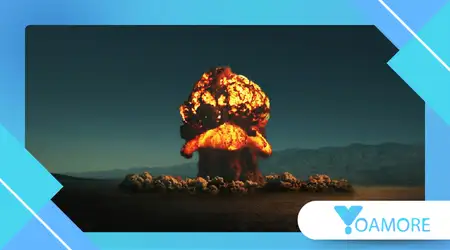
El Forgotten Atomic Bomb Test That Changed the Sahara remains a pivotal yet overlooked chapter in geopolitical history, marking the moment France joined the elite global nuclear club.
Anuncios
This event, codenamed Gerboise Bleue, significantly altered the North African landscape and sparked enduring debates regarding environmental safety, colonial legacies, and the long-term health of local desert populations.
In this deep dive, we explore the strategic motivations behind the blast, the technical execution of the test, and the lasting geopolitical consequences that still resonate across the region today.
Summary of Key Topics
- The origins of the French nuclear program in Algeria.
- Technical specifications of the Gerboise Bleue detonation.
- Environmental and humanitarian impacts on the Sahara.
- Modern radioactive legacy and recent 2026 declassifications.
What was the Gerboise Bleue nuclear experiment?
In the early morning of February 13, 1960, the French military detonated its first atmospheric nuclear device at the Reggane Oasis in the Algerian Sahara.
This operation served as a defiant statement of national sovereignty, ensuring France would not be sidelined during the Cold War’s intensifying arms race between superpowers.
Anuncios
The device was an undisputed monster of its time, boasting a yield of roughly 70 kilotons—nearly four times the power of the bomb dropped on Hiroshima.
This massive energy release ensured that the Forgotten Atomic Bomb Test That Changed the Sahara would leave a permanent scar on the Tanezrouft track.
By successfully testing this plutonium-filled device, France became the world’s fourth nuclear power. However, the prestige of the “Blue Jerboa” came at a staggering cost to the environment and the nomadic tribes who had inhabited these arid lands for centuries without any prior warning.
Why did France choose the Algerian Sahara for testing?
The decision was driven by a mix of logistical convenience and the fading grip of colonial administration. French scientists required a vast, seemingly “empty” space to contain the fallout, and the Reggane district offered the perfect combination of isolation and military-controlled infrastructure during the Algerian War.
Despite the desert’s reputation for emptiness, thousands of Algerian workers and French soldiers lived near the Ground Zero site.
The military planners prioritized atmospheric testing because it was cheaper and faster than underground shafts, disregarding the unpredictable nature of high-altitude Saharan winds that carried radioactive dust.
Consequently, the fallout was not confined to the testing range. Meteorological reports from the era indicate that radioactive particles traveled as far as Sudan and even parts of Southern Europe, illustrating the massive scale of the Forgotten Atomic Bomb Test That Changed the Sahara beyond its borders.
How did the test affect the Saharan environment?
The immediate impact was the vitrification of the desert floor, where the intense heat turned sand into a dark, radioactive glass known as trinitite.
This physical transformation was only the beginning, as the blast released isotopes like Cesium-137 and Strontium-90 into the fragile desert ecosystem.
Decades later, these isotopes remain active in the soil and groundwater. The Saharan winds frequently pick up these ancient particles, redistributing them across the Sahel and North Africa during seasonal dust storms, which creates a recurring cycle of low-level radiation exposure for modern residents.
Many radioactive materials were simply buried under a thin layer of sand, leaving them vulnerable to erosion and accidental discovery by unsuspecting locals.
+ El volcán islandés que perturbó el mundo en 1783
Technical Data: The Gerboise Series (1960-1961)
| Test Name | Fecha | Yield (Kiloton) | Tipo | Área de impacto |
| Gerboise Bleue | Feb 13, 1960 | ~70 kt | Atmospheric | Reggane, Algeria |
| Gerboise Blanche | Apr 01, 1960 | ~5 kt | Atmospheric | Tanezrouft |
| Gerboise Rouge | Dec 27, 1960 | ~2 kt | Atmospheric | Reggane District |
| Gerboise Verte | Apr 25, 1961 | <1 kt | Atmospheric | Localized |
When did the public learn about the hidden fallout?
For years, the true extent of the contamination was a closely guarded state secret. It wasn’t until the late 1990s and early 2000s that declassified documents revealed how far the radiation plume had actually traveled, sparking outrage among veterans and Algerian civil rights groups.
The French government eventually acknowledged the health risks in 2010 with the Morin Law, which offered a framework for compensation.
However, many claimants found the legal hurdles nearly impossible to clear, as the burden of proof regarding 1960s exposure was placed on the aging victims.
Even in 2026, the Forgotten Atomic Bomb Test That Changed the Sahara remains a point of diplomatic tension.
Recent archaeological surveys using drone-mounted Geiger counters have identified “hot zones” that were previously unmarked, forcing a new conversation about the ethical responsibilities of former colonial powers.
+ La guerra mundial que casi comenzó por un cerdo (La guerra del cerdo)
Which communities are still feeling the impact today?
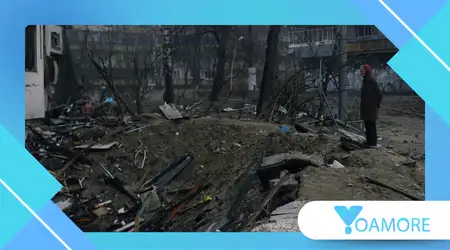
The descendants of the Saharan nomads and the residents of the Adrar Province continue to report higher-than-average rates of thyroid issues and congenital birth defects.
These health challenges are compounded by the region’s limited medical infrastructure, making it difficult to establish a definitive epidemiological link.
Furthermore, the “sand of the Sahara” has become a metaphorical carrier of history. When Saharan dust travels to France or Spain during the spring, researchers often detect trace amounts of the 1960s isotopes, serving as a periodic, radioactive reminder of the decisions made sixty-six years ago.
This ongoing environmental justice issue highlights the dark side of the nuclear age.
While France achieved its goal of strategic autonomy, the Forgotten Atomic Bomb Test That Changed the Sahara serves as a cautionary tale for any nation prioritizing military dominance over the long-term health of the planet.
+ La plaga olvidada antes de la peste negra
What are the lessons for today’s digital professionals?
While this topic may seem far removed from the world of remote work, it offers a profound lesson in “Long-Term Impact Analysis.”
Just as nuclear scientists failed to account for the decades-long decay of isotopes, professionals often overlook the long-tail consequences of their business decisions and digital footprints.
Sustainable careers are built on the foundation of ethics and transparency. Whether you are developing a new technology or managing a global team, understanding the historical context of the regions you interact with fosters a more responsible and informed professional perspective in a globalized economy.
El legado de la Forgotten Atomic Bomb Test That Changed the Sahara reminds us that “out of sight” does not mean “gone.”
As global citizens, maintaining an awareness of these historical disruptions helps us advocate for a more transparent, accountable, and environmentally conscious future for everyone.
Conclusión
The Gerboise Bleue test was more than just a scientific milestone; it was a transformative event that reshaped the Sahara’s physical and political reality.
By revisiting this history, we honor the voices of those affected and ensure that the pursuit of progress never again ignores the sanctity of human life and environmental health.
For those interested in the intersections of history, policy, and environmental science, you can find detailed archives on the CTBTO Preparatory Commission website, which tracks the global effort to end nuclear testing forever.
Preguntas frecuentes
1. Is the Sahara still radioactive today?
Yes, certain areas around the Reggane site still exhibit higher-than-background radiation levels. While it is safe to travel through most of the desert, specific Ground Zero locations remain restricted to prevent accidental exposure to contaminated soil.
2. How many nuclear tests did France conduct in Algeria?
France conducted a total of 17 nuclear tests in the Algerian Sahara between 1960 and 1966. These included four atmospheric tests (the Gerboise series) and thirteen underground tests at the In Ekker site before moving operations to French Polynesia.
3. Has France compensated the victims?
The 2010 Morin Law established a compensation fund for veterans and civilians. However, the process is notoriously difficult, and many Algerian victims still struggle to receive recognition or financial support for the illnesses believed to be caused by the fallout.
4. Why is it called “Gerboise Bleue”?
The name translates to “Blue Jerboa.” The jerboa is a small desert rodent native to the Sahara, and blue was chosen to represent the first color of the French national flag, symbolizing the birth of the French nuclear strike force.