
Walk through any international departure terminal or boutique hotel lobby on a Tuesday morning, and you will spot them immediately—laptops open, noise-canceling headphones clamped down, quietly running businesses from architectural pass-throughs.
Anúncios
Looking closely at the Culture of People Who Occupy Liminal Spaces reveals a distinct professional tribe that refuses to wait until reaching a fixed destination to do meaningful work.
There is something quietly subversive about turning a transit corridor into an anchor for deep focus.
While traditional corporate structures still equate seriousness with permanent real estate, independent workers have learned to treat temporary thresholds as legitimate, energizing habitats.
Over the next few minutes, we will unpack how this micro-culture operates in practice, from unspoken lounge etiquette to the psychological guardrails that prevent constant motion from turning into quiet exhaustion:
Anúncios
- Tracing the sociological roots of transitional workspaces
- Decoding the silent social contracts of shared lounges and terminals
- Matching real-world acoustic and connectivity metrics to your daily workload
- Protecting client data, physical posture, and mental recovery on the move
What Is the Culture of People Who Occupy Liminal Spaces?

Back in the late 1960s, anthropologist Victor Turner borrowed the word liminality to describe that disorienting, in-between phase of a rite of passage when someone has left an old social status behind without yet stepping into a new one.
Decades later, urban theorists carried his insight into physical architecture, pointing out how hallways, waiting rooms, and airport concourses suspend us in a strange, temporary neutrality.
Inside modern remote work, the Culture of People Who Occupy Liminal Spaces belongs to freelancers, founders, and distributed specialists who deliberately inhabit these architectural pauses.
Instead of viewing a two-hour layover or a quiet hotel atrium as dead time to endure, they convert neutral ground into a nimble satellite office.
This habit is often misunderstood as mere hustle culture—an inability to log off while traveling. In reality, it builds directly on sociologist Ray Oldenburg’s famous work on “third places,” expanding his neighborhood coffeehouse model into fluid “fourth places” where transit, hospitality, and high-speed bandwidth intersect.
Why Do Remote Professionals Gravitate Toward Transitional Environments?
Working alone at a kitchen table week after week carries a subtle, creeping weight that eventually dulls creative momentum.
Psychologists refer to the antidote as body doubling—the simple human relief of working alongside strangers whose quiet motion anchors your own wandering attention without demanding small talk.
A change of scenery also wakes up a tired brain. Stepping out of a silent apartment and into the low hum of a train station cafe draws a crisp psychological line between domestic life and paid client delivery, giving sluggish mornings an immediate spark.
Data tracked by the U.S. Bureau of Labor Statistics reflects how deeply location flexibility has reshaped American labor patterns across the past decade.
When you no longer tether your livelihood to a single zip code, an hour inside a sunlit museum atrium or quiet rail lounge stops feeling like a compromise and starts feeling like autonomy.
How Does Social Etiquette Function Inside Liminal Workspaces?
Every functional subculture runs on invisible rules, especially when dozens of strangers are competing for the same three wall outlets and corner armchairs.
People fluent in the Culture of People Who Occupy Liminal Spaces communicate almost entirely through posture, gear placement, and acoustic restraint.
Over-ear headphones act as a universal velvet rope, signaling to nearby travelers that you are mid-sprint and unavailable for casual conversation.
Pull those cups back around your neck while waiting at the espresso bar, however, and you quietly reopen the door to spontaneous exchanges with fellow builders and consultants.
Nothing breaks that fragile truce faster than treating a shared lobby like a private conference room.
Stepping into an acoustic pod for client calls—or keeping your backpack off an empty chair during the morning rush—separates seasoned regulars from careless tourists.
+ Inside the Microculture of Repetitive Labor
Which Physical Spaces Best Support Sustainable Remote Productivity?
Not every in-between space deserves your best cognitive hours, and treating a chaotic coffee shop like a coding bunker usually ends in frustration.
Picking the right room means weighing background decibels, chair height, and Wi-Fi stability against the exact mental gear your afternoon requires.
| Venue Category | Average Ambient Noise (dBA) | Typical Stay Duration | Optimal Work Mode | Connectivity & Power Reliability |
| Airport Lounges | 58 – 64 dBA | 1.5 – 3 Hours | Inbox triage, async updates, planning | High (dedicated fiber, plentiful outlets) |
| Upscale Hotel Lobbies | 52 – 60 dBA | 2 – 4 Hours | Deep writing, strategy, client calls | High (enterprise Wi-Fi, lobby seating) |
| Specialty Coffee Shops | 65 – 72 dBA | 1 – 2 Hours | Brainstorming, design, light coding | Moderate (limited plugs, shared bandwidth) |
| Intercity Rail Cars | 60 – 68 dBA | 2 – 5 Hours | Long-form reading, offline editing | Variable (cellular hotspots required) |
| Public Library Atriums | 40 – 48 dBA | 3 – 6 Hours | Heavy analytical research, coding | High (municipal fiber, ergonomic desks) |
Occupational acoustics research has long shown that a steady murmur hovering around 60 decibels nudges the brain toward abstract, lateral thinking.
Save silent public library atriums for dense technical problem-solving, and let the gentle clatter of a hotel lounge carry your big-picture brainstorming.
+ The Microculture of People Who Live in Perpetual Transition
What Tools Protect Focus and Cybersecurity in Public Thresholds?
Public networks are notoriously forgiving to snoopers, and peering over a stranger’s shoulder on an Amtrak train takes zero technical skill.
Veterans of the Culture of People Who Occupy Liminal Spaces treat operational security and physical ergonomics with the same seriousness an architect brings to a blueprint.
Routing your connection through a modern WireGuard-based VPN scrambles sensitive client files before they ever touch an airport router.
Slipping a polarized privacy filter over your display finishes the job, turning your screen dark to anyone sitting an arm’s length to your left or right.
- Portable Battery Packs: A high-output 20,000mAh USB-C power bank frees you from hugging walls near scarce outlets when a flight board suddenly flips to delayed.
- Compact Laptop Stands: Folding aluminum risers bring your screen up to eye level, saving your neck from the slow ache of hunching over low coffee tables.
- Offline-First Software: Local-first editors and synced repositories keep your momentum intact the moment a regional train dives into a rural cellular dead zone.
- Bone-Conduction or ANC Audio: Active noise cancellation softens the low drone of HVAC vents and jet engines so your brain wastes less energy filtering background noise.
How Can Freelancers Avoid Burnout While Working in Motion?
There is a catch to making every waiting room feel productive: if every spare twenty minutes becomes a work sprint, your nervous system never actually clocks out.
Behavioral researchers frequently caution that erasing all idle downtime slowly drains the executive focus you rely on for hard creative decisions.
You have to build artificial doors when the room itself has none.
Closing every browser tab, jotting down tomorrow’s first step, and zipping your laptop into its sleeve creates a tactile ending—a clear signal to your brain that the workday is over, even if you are still waiting at Gate B14.
Findings on occupational recovery highlighted by the American Psychological Association underscore that true psychological detachment during off-hours is what keeps independent careers sustainable over the long haul.
Treat transitional spaces as invitations for unhurried thinking rather than an excuse to bill every waking hour.
Building an Intentional Rhythm in In-Between Places
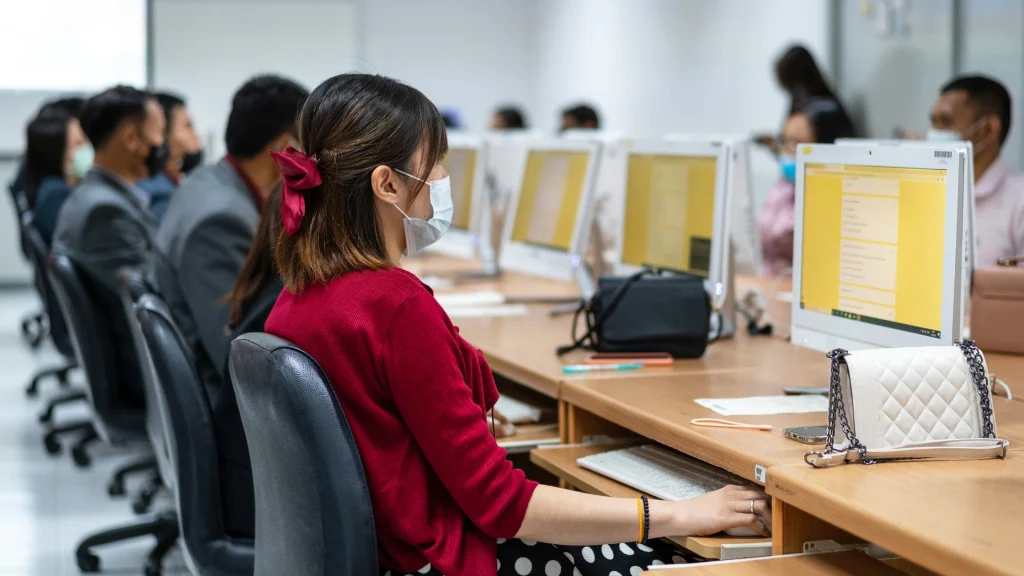
Living well inside the Culture of People Who Occupy Liminal Spaces comes down to choice rather than restlessness.
Anyone can open a laptop in a noisy terminal; the real craft lies in matching the texture of a room to the exact kind of thinking you need to do that morning.
When you pair basic digital hygiene and ergonomic care with firm stopping points, transit corridors stop feeling like chaotic interruptions.
They become quiet, reliable allies—giving you the freedom to build steady, self-directed work from almost anywhere on the map.
+ The Shared Language of Repeated Small Talk
Frequently Asked Questions (FAQ)
What defines a liminal space in remote work culture?
A liminal space is any transitional environment situated between primary destinations—think airport lounges, hotel atriums, intercity trains, and neighborhood cafes.
Remote professionals use these thresholds as temporary workspaces to bridge scheduling gaps and break free from home-office isolation.
Is working from public transit hubs safe for handling confidential client data?
Public hubs are safe enough for sensitive client work provided you enforce basic digital hygiene, including a trusted VPN, hardware privacy screen filters, and multi-factor authentication.
Connecting directly to open airport or cafe Wi-Fi without encrypted tunneling leaves your traffic exposed to local interception.
How does ambient noise in transitional spaces affect cognitive performance?
Steady background chatter between 55 and 65 decibels introduces mild cognitive friction that can actually sharpen abstract, creative problem-solving.
Sharp, unpredictable interruptions—like nearby phone calls—do the opposite, making active noise-canceling headphones vital whenever you need deep analytical focus.
Can working in liminal spaces worsen freelancer burnout over time?
Treating every transit delay or waiting room as mandatory billable time will eventually wear down your focus and blur personal boundaries.
Protecting screen-free travel intervals and practicing a deliberate end-of-day shutdown ritual keeps your routine sustainable.