


Many modern homeowners find comfort in smart security systems, yet ancient traditions remain prevalent, explaining why certain villages bury shoes under new homes even today.
Anúncios
This practice, rooted in centuries of spiritual protection, continues to fascinate architectural historians and anthropologists who study the intersection of folklore and domestic construction.
Summary of Exploration
- Tracing the ritual back to 14th-century European customs and beliefs.
- Understanding the shoe as a vessel for the human spirit and protection.
- Why contemporary builders in specific regions still honor these concealed folk traditions.
- Identifying how different cultures adapt the practice of concealment for architectural luck.
What is the history behind why villages bury shoes under new homes?
The archaeological record confirms that the habit of hiding footwear within the fabric of a building is far from a random act of waste.
Historically, this practice gained significant momentum across the British Isles and Northern Europe during the late Middle Ages, peaking between 1700 and 1900.
Researchers often categorize these finds as “concealed objects,” specifically intended to guard the “vulnerable” openings of a house, such as chimney breasts, windowsills, and door frames.
Anúncios
Unlike foundation sacrifices of earlier eras, shoe concealment was a more refined, symbolic gesture meant to preserve the domestic peace.
The Northampton Museum and Art Gallery maintains an extensive [link suspeito removido], documenting thousands of discoveries that prove this was a widespread, deliberate cultural phenomenon.
These artifacts provide a tangible link to the anxieties and hopes of families living through periods of immense social and spiritual transition.
Why are worn shoes specifically chosen for concealment?
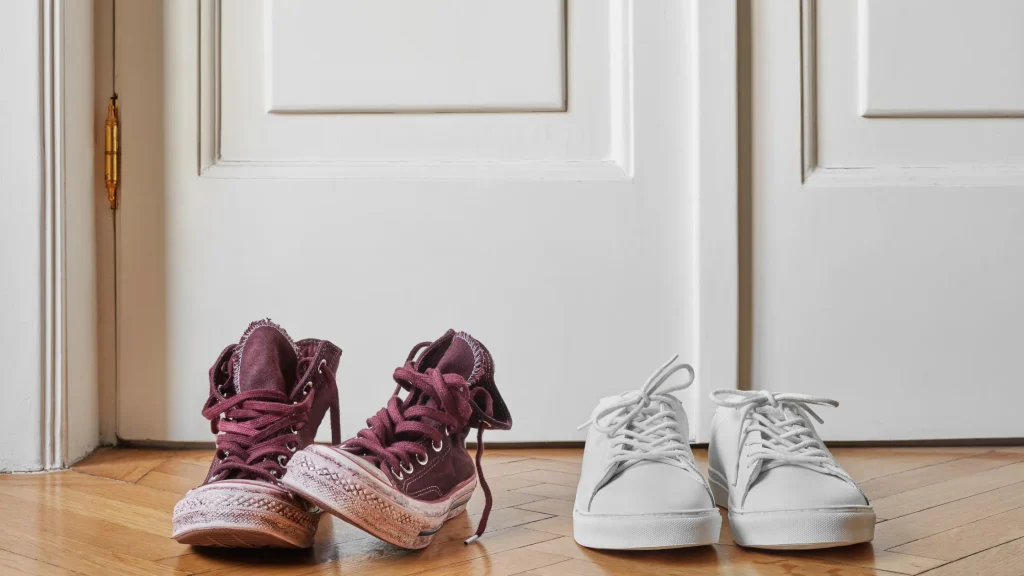
An essential aspect of this ritual is that the shoes are almost never new; they are heavily worn, molded to the specific shape of the wearer’s foot.
In folkloric tradition, the shoe was believed to retain the “essence” or the soul of the individual who walked in it.
By placing a worn item under the floorboards, the inhabitants believed they were leaving a spiritual guardian behind.
This surrogate presence was thought to trick malevolent spirits or witches, leading them to believe a person was permanently guarding that specific entry point.
The physical imprint of the heel and toes served as a psychic signature, anchoring the home’s energy to its rightful owners.
It represents an intimate connection between the human body and the physical structure, turning a house into a living, protected sanctuary.
Also Read: How Small Towns Adapt to Seasonal Population Swings
Which regions still practice these concealment rituals in 2026?
While urbanization has erased many local customs, rural pockets in the United Kingdom, New England, and parts of Australia still report instances where villages bury shoes under new homes.
In these communities, the act has shifted from a literal fear of demons to a respected heritage practice.
In many cases, modern renovations reveal old caches, prompting homeowners to re-bury the original shoe alongside a new one to maintain the “line of protection.”
This bridge between the past and present keeps the architectural history of the village alive and spiritually grounded.
Modern practitioners often view it as a “time capsule” of sorts, though the underlying motivation remains a desire for longevity and luck.
It is a quiet, private ceremony that bypasses modern religious affiliations, tapping into a more primal, earth-bound sense of belonging and safety.
+ The Superstition of Borrowed Fire and Shared Fortune
What are the spiritual protections associated with hidden footwear?
The primary purpose of these hidden talismans was to ward off the “Evil Eye” and malicious supernatural forces.
In the minds of pre-industrial villagers, a house was a permeable vessel that required constant vigilance against external spiritual threats.
Shoes were particularly effective because they represent the “mighty walker,” a symbol of human agency and the ability to traverse difficult paths.
Placing them near the hearth—the heart of the home—was believed to prevent spirits from descending the chimney.
Interestingly, shoes are often found paired with other protective items, such as “witch bottles” or dried animal remains.
This multi-layered approach to spiritual defense highlights how deeply our ancestors feared the unseen and how much they valued the sanctity of their private living spaces.
You make also like: Lucky and Unlucky Colors: Cultural Meanings Around the World
How does the location within the house affect the ritual?
The precise placement of the shoe was never accidental; it targeted the weakest points of the building’s envelope.
Thresholds and corners were the most common sites, as these areas represented the boundary between the safe interior and the wild, unpredictable exterior.
Under the stairs is another frequent location, symbolizing the transition between the public lower floor and the private sleeping quarters above.
Each hidden shoe acted as a silent sentry, monitoring the flow of energy and people throughout the structural frame.
| Region | Primary Placement | Common Era | Purpose |
| United Kingdom | Chimney Breasts | 18th – 19th Century | Warding off witches |
| New England | Foundation Walls | 17th – 18th Century | General good luck |
| Scandinavia | Door Thresholds | 19th Century | Protecting against trolls |
| Australia | Under Floorboards | Late 19th Century | Cultural heritage/Luck |
Why do modern architects take interest in these findings?
Contemporary architects and restorers view these discoveries as vital data points for understanding historical building techniques and social hierarchies.
The quality of the hidden shoe often reflects the economic status of the family that once lived there.
Furthermore, integrating folklore into modern design has become a niche trend for those seeking a “soulful” approach to construction.
Understanding why villages bury shoes under new homes allows designers to respect the cultural narrative of the land they are building upon.
It fosters a sense of continuity, acknowledging that a building is more than just timber and stone; it is a repository of human experience.
By documenting these finds, professionals ensure that the intangible heritage of a community is not lost to the progress of modernization.
When should homeowners expect to find these artifacts?
Most discoveries occur during significant structural renovations or the demolition of historic properties built before the mid-20th century.
Because the shoes were hidden in voids and wall cavities, they often remain perfectly preserved for hundreds of years.
Finding such an object can be a profound experience, connecting the current resident to a nameless predecessor.
Experts recommend documenting the find and, if possible, leaving it in place or donating it to a local historical society for preservation.
Removing a shoe without acknowledging its purpose is sometimes seen by locals as “breaking the spell.”
Whether one believes in the superstition or not, the ethical preservation of these folk artifacts is crucial for maintaining the historical integrity of the property.
The enduring mystery of why villages bury shoes under new homes reveals a deep-seated human need for security and symbolic connection.
From the chimney breasts of Victorian England to the foundations of modern rural dwellings, these leather sentries remain silent witnesses to our history.
By honoring these customs, we acknowledge that the places we inhabit are built on layers of belief, protection, and the persistent hope for a safe future.
Whether viewed as a quirky superstition or a profound spiritual rite, the concealed shoe remains one of the most intimate and enduring mysteries of the domestic world.
For more deep dives into the strange and beautiful customs of global microcultures, you can explore the Museum of British Folklore, which catalogues the living traditions of the British people.
FAQ
Is it bad luck to remove a shoe found in a wall?
Many folk traditions suggest that removing a concealed shoe can “disturb the peace” of a home. Historians generally recommend documenting the item and returning it to its original resting place to honor the tradition.
What kind of shoes are usually found?
Most finds consist of single shoes, often heavily repaired or worn down. They range from children’s slippers to heavy work boots, representing the diverse demographics of past village inhabitants.
Does this tradition exist outside of Europe?
Yes, the practice migrated with settlers to North America and Australia. While the specific reasons why villages bury shoes under new homes may vary slightly, the core theme of domestic protection remains consistent globally.
Are there other items buried in homes for luck?
Absolutely. Aside from shoes, people have historically hidden coins, written charms, dried cats, and “witch bottles” filled with pins and salt to protect their households from misfortune.
How can I identify a ritual shoe from regular trash?
A ritual shoe is typically found in a deliberate location, like a wall cavity or under a hearth, and shows signs of intentional placement rather than accidental loss or disposal.