Closing a laptop after ten straight hours of remote work rarely feels like freedom anymore.
Anúncios
Mostly, it just feels like trading one glowing pane of glass for a slightly smaller one in your palm.
Stepping into screen-free hobbies has quietly mutated from a quaint weekend pastime into a pointed refusal of the attention economy.
There is something revealing—almost defiant—about how digital professionals define status now.
Fifteen years ago, cultural cachet meant having the earliest smartphone upgrade and answering emails before anyone else woke up.
Anúncios
Now, it belongs to the person who can vanish from Slack for an entire Sunday without apology.
What follows looks at why analog craft has turned into a quiet marker of autonomy and what federal time-use numbers actually show about our evenings.
You will also find practical ways for working freelancers to build tactile habits without turning rest into another productivity metric.
Table of Contents
- Why are screen-free hobbies emerging as a modern status symbol?
- How does continuous digital exposure affect remote workers?
- What data reveals the shift toward offline leisure?
- Which tactile activities offer the highest cognitive recovery?
- How can busy freelancers build sustainable offline routines?
- Frequently Asked Questions
Why are screen-free hobbies emerging as a modern status symbol?

Luxury has a funny way of inverting whatever happens to be scarce.
During the industrial boom, pale skin signaled that you worked indoors away from the fields.
Once office jobs became the default, a winter tan suddenly meant you could afford a plane ticket south.
A similar inversion is playing out across creative and tech circles right now.
When every algorithm is engineered to harvest micro-attention, showcasing a warped ceramic mug you threw yourself—or a loaf of sourdough that took two days of ambient patience—reads as proof that nobody owns your clock.
Committing to screen-free hobbies announces, without a single humblebrag, that your income does not depend on frantic, twenty-four-hour vigilance.
Even the aesthetic shift toward vinyl records, dog-eared paperbacks, and mechanical watches points to the same underlying hunger.
People are tired of living inside frictionless, disposable interfaces that leave nothing behind when the battery dies.
How does continuous digital exposure affect remote workers?
Most remote workers spend somewhere between eight and eleven hours toggling between spreadsheets, Figma boards, video calls, and messaging threads.
On paper, none of that looks physically taxing, which is precisely why people misread the exhaustion that follows.
Cognitive psychologists call this steady erosion directed attention fatigue.
Every notification forces your prefrontal cortex to evaluate urgency, suppress an impulse, and reorient—a microscopic tax paid hundreds of times before dinner.
Switching from a client deck to a streaming queue does not actually let those circuits cool down.
Artificial light and rapid visual cuts keep the nervous system humming in low-grade alert, leaving freelancers strangely wired at midnight and foggy at eight in the morning.
This exact pattern is documented in research from the American Psychological Association on stress and technology.
Why do remote workers struggle to disconnect without a physical anchor?
Most remote professionals assume logging off is simply a matter of closing browser tabs and silencing notifications.
Yet when your living room doubles as your office, the boundary between paid labor and personal life dissolves into thin air.
Without a physical signal that the workday has ended, your brain lingers in a low-grade standby mode, anticipating the next ping.
This subtle tension explains why passive evening rest rarely restores creative energy after a demanding sprint.
Stepping into screen-free hobbies introduces a tangible friction that forces your nervous system to switch gears completely.
When your hands are busy shaping clay, tuning an acoustic guitar, or kneading dough, checking client messages becomes physically inconvenient.
That deliberate interruption gives your mind the clean break required to recover before tomorrow’s deadlines begin.
+ How micro-celebrations are redefining modern traditions
What data reveals the shift toward offline leisure?
Strip away the romanticism around analog living, and the numbers tell a sharper story about how badly skewed our off-hours have become.
Labor statisticians have tracked American leisure habits for decades, and the gap between passive screen time and active physical craft remains stark.
Looking at figures from the U.S. Bureau of Labor Statistics makes the trade-off impossible to ignore.
Most adults still default to the lowest-friction option available after a draining shift.
| Leisure Category | Average Daily Time (U.S. Adults) | Cognitive Impact | Primary Cultural Driver |
| Watching Television & Streaming | 2.86 hours | Low stimulation; passive fatigue | Habitual default after work |
| Reading Print Books & Magazines | 0.25 hours (15 mins) | High focus; memory consolidation | Desire for deep narrative immersion |
| Arts, Crafts & Physical Hobbies | 0.32 hours (19 mins) | Flow state; motor-cortex activation | Tangible skill mastery and pride |
| Socializing & Community Events | 0.58 hours (35 mins) | Oxytocin release; reduced isolation | Craving authentic face-to-face connection |
Source: U.S. Bureau of Labor Statistics (American Time Use Survey).
Nineteen minutes a day on arts, crafts, and physical pastimes sounds almost trivial until you notice what happens when people nudge that number upward.
Even a modest shift toward screen-free hobbies breaks the trance of passive consumption.
It replaces that hollow, post-scroll stupor with the quiet satisfaction of having made or practiced something real.
+ Why text-hip is turning public reading into a social ritual today
Which tactile activities offer the highest cognitive recovery?
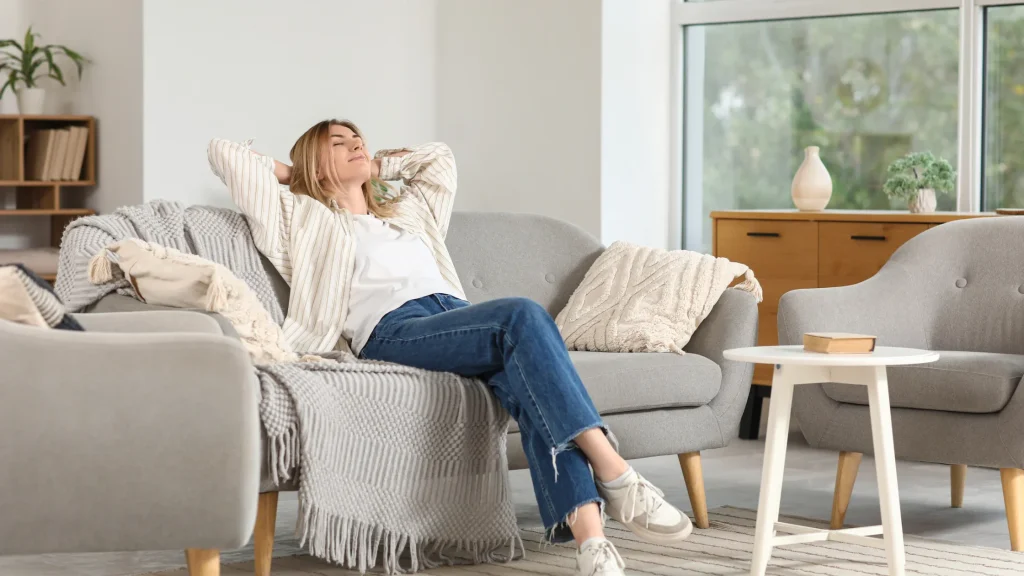
Not every offline activity restores a fried brain equally, because recovery depends on engaging parts of the nervous system that your day job ignores.
Someone who spends forty hours manipulating abstract text and pixels needs physical resistance—materials that push back, stain your fingers, or punish sloppy focus.
- Woodworking and Whittling: A sharp gouge and a block of basswood leave zero room for multitasking; your hands demand complete spatial presence, which mercifully silences background career anxiety.
- Analog Film Photography: Limiting yourself to thirty-six frames turns looking into a deliberate act again, trading frantic burst-mode shooting for patience and delayed surprise.
- Botanical Gardening and Permaculture: Soil operates on weather and biology rather than quarterly sprints, reminding remote workers that growth cannot always be accelerated with better software.
- Acoustic Musical Instruments: Wrestling through a tricky chord progression recruits motor memory and auditory feedback in ways that make algorithmic feeds feel flat by comparison.
- Culinary Fermentation and Baking: Working dough by hand engages smell, temperature, and texture—senses that stay virtually dormant through back-to-back video calls.
There is a subtle psychological relief in dealing with objects that obey physics instead of user-experience design.
Clay cracks if you rush it, and yeast stalls if the kitchen is too cold. Neither cares how optimized your calendar is.
How can busy freelancers build sustainable offline routines?
Relying on sheer discipline at eight in the evening is a losing bet, mostly because decision fatigue has already gutted your willpower by then.
Sustainable offline habits come down to friction—making the phone slightly annoying to reach and the analog alternative effortless to start.
- Create an entryway charging ritual: Leave your phone plugged into a hallway outlet by early evening so the bedroom and couch stop doubling as extensions of your desk.
- Stage your tools in plain sight: Keep a sketchbook, yarn basket, or paperback open on the kitchen table before you even open your laptop in the morning.
- Protect hobby hours like client retainers: Block off a recurring weeknight class or club run on your calendar and treat it with the same seriousness as a paid deliverable.
- Find local rooms with shared craft: Surrounding yourself with neighbors invested in screen-free hobbies turns solitary discipline into an easy, social rhythm.
Start absurdly small—twenty unhurried minutes beats an ambitious weekend digital detox that leaves you restless by Saturday noon.
Over time, that quiet stretch stops feeling like a discipline exercise.
Instead, it starts feeling like the only part of the day that genuinely belongs to you.
+ Section 8 Housing: How Rental Assistance Works and Who May Qualify
Conclusion
Choosing where your attention goes may be the most consequential career decision available to independent workers right now.
Building a life around screen-free hobbies does not make you nostalgic or anti-technology.
It simply draws a firm border around the parts of your mind that are not for sale.
When your evenings involve wood, paper, soil, or flour instead of endless feeds, you show up to client work sharper, calmer, and harder to rattle.
Readers looking for clinical perspectives on mental restoration and digital boundaries can explore further guidance through the Harvard Health Publishing wellness library.
Frequently Asked Questions
What makes screen-free hobbies a cultural statement right now?
Constant digital availability has turned uninterrupted focus into a rare privilege.
Choosing offline craft signals that you control your own schedule and refuse to let algorithmic feeds dictate your downtime.
How many hours a week should remote workers spend on offline activities?
Setting aside four to seven hours across the week—roughly forty-five minutes a day—usually delivers noticeable relief from eye strain and mental fog without threatening freelance deadlines.
Which screen-free hobbies require the lowest financial investment to start?
Graphite sketching, trail running, library reading groups, origami, and bodyweight training cost almost nothing to begin while offering immediate tactile engagement and steady skill progression.
Can analog hobbies actually improve freelance productivity and income?
Indirectly, yes—offline flow states replenish the directed attention required for complex problem-solving.
This mental recovery helps freelancers set firmer client boundaries and avoid the burnout that stalls long-term earning power.