
Preserving an endangered minority language is rarely a matter of institutional willpower; it is an intimate, fragile battle fought at the kitchen table.
Anúncios
While modern school systems struggle to keep heritage tongues alive through rigid curriculums, families remain the only resilient structures capable of natural linguistic preservation.
Within the quiet rhythms of the home, older generations act as essential cultural anchors.
Exploring the distinct role of grandmothers in language transmission reveals a profound, often underestimated impact on how children internalize the very cadence of threatened indigenous speech.
This analysis unpacks the messy reality of intergenerational dynamics, emotional heritage connections, shifting family structures, and what it actually takes to save a language.
Anúncios
Read below to discover how senior maternal figures are quietly keeping global linguistic identity from slipping away.
What Is the Role of Grandmothers in Language Transmission?
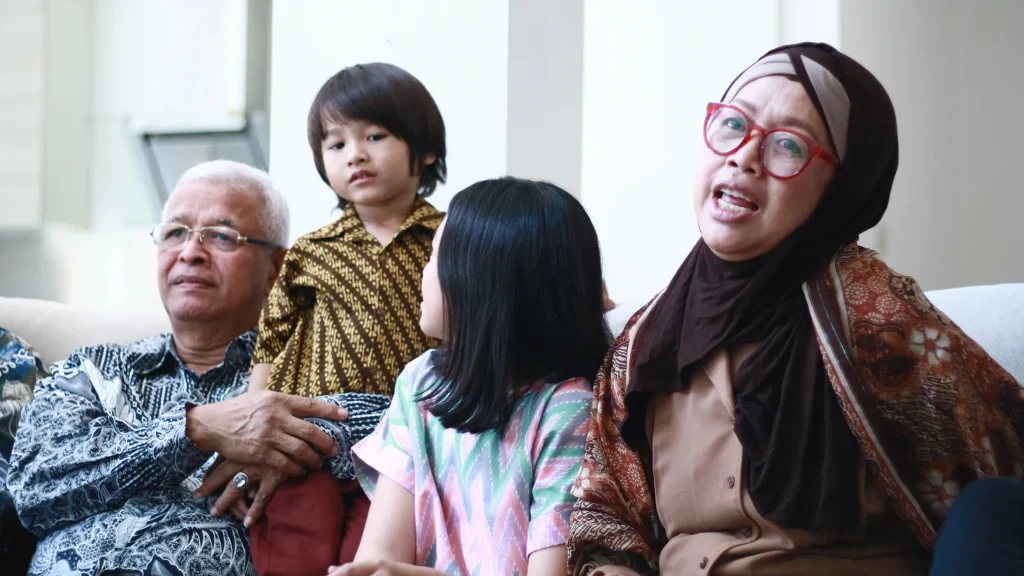
Grandmothers are not merely passive repositories of old words; they are the active, living bridges connecting historical heritage with modern, distracted generations.
Their unique position within the household allows for an immersive, conversational flow that a standard classroom simply cannot replicate.
Older maternal figures possess both the cultural patience and the deep, un-Anglicized vocabulary needed for true immersion.
They are the ones who pass down specific idiomatic expressions, regional folklore, and personal historical narratives that give a language its soul.
How Does Intergenerational Interaction Prevent Linguistic Extinction?
Languages do not die because children stop learning them; they die because communities stop speaking them organically. Intergenerational interaction disrupts this cycle by creating a pressure-free environment where an ancestral tongue can breathe.
When grandmothers engage children through casual storytelling, they bypass the self-consciousness that comes with formal education. Children absorb complex grammatical structures and distinct phonetics without realizing they are being taught
Why Do Modern Working Environments Value Matriarchal Language Guardians?
The relentless demands of the modern digital economy mean parents are increasingly stretched thin, working long hours away from the domestic sphere.
This economic reality frequently leaves grandmothers as the primary anchor of daily childcare.
While parents navigate corporate responsibilities, matriarchs shape the linguistic environment of the home.
They weave heritage vocabulary into the mundane moments of the day—during meals, walks, and bedtime routines.
Understanding this practical role of grandmothers in language transmission should fundamentally change how we approach cultural revitalization.
Relying solely on textbooks is a mistake; communities must integrate these natural matriarchal networks into early childhood initiatives.
++ The impact of AI voice cloning ethics on rare languages
When Does the Shift in Intergenerational Language Transmission Turn Critical?
The tipping point for an endangered tongue usually occurs when a household transitions from active bilingualism to passive listening.
This shift happens rapidly, often within a single generation, if the elder maternal figures lose their daily conversational presence due to urban migration or changing housing trends.
When grandmothers are separated from the daily routine of grandchildren, the casual reinforcement of rare idioms stops completely.
The younger generation might still understand the language when spoken by elders, but they lose the mechanical comfort required to speak it spontaneously.
Analyzing the role of grandmothers in language transmission during these critical windows reveals that their presence acts as a linguistic shield.
Without this domestic shield, the dominant societal language quickly overwrites the minority tongue within the home.
++ How wedding songs language traditions preserve rare speech
| Shift Phase | Behavioral Indicator | Impact on Continuity |
| Active Fluidity | Fluent daily dialogue | Secure transmission |
| Passive Reception | Child understands but answers in dominant language | High risk of disruption |
| Structural Loss | Monolingual youth; language becomes a textual study | Terminal dialect decay |
What Are the Specific Cognitive Benefits of Matriarchal Language Exposure?

Children who acquire an ancestral tongue directly from older relatives develop unique cognitive pathways that standard school environments rarely foster.
The vocabulary used by elders is deeply tied to contextual memory, sensory experiences, and distinct historical environments.
This natural method of absorption stimulates metalinguistic awareness—the ability to think about language structure abstractly.
Because older maternal figures use traditional syntax unaffected by modern urban slang, children receive a pure linguistic template.
It trains young minds to process distinct cultural frameworks, boosting general problem-solving skills and emotional empathy from an early age.
Which Grassroots Strategies Best Amplify the Impact of Grandmothers?
Top-down institutional funding rarely trickles down to the domestic spaces where dialects actually survive or wither away.
The most effective revitalization efforts focus directly on empowering older women within their immediate tribal or local neighborhoods.
Community kitchens, localized storytelling circles, and neighborhood daycare programs led by elders create organic environments for immersion.
These spaces allow matriarchs to utilize their natural authority to normalize the heritage tongue outside their immediate family lines.
When communities invest directly in these senior-led domestic spaces, they create sustainable networks that protect linguistic heritage organically.
++ The decline of pastoralist languages in changing rural economies
Which Documented Factors Support Matriarchal Linguistic Success?
A grandmother’s linguistic impact is not magic; it depends heavily on physical proximity, community validation, and structural family support. When a household isolates its elders, the chain of transmission breaks instantly.
According to extensive research tracking vulnerable dialects, compiled by the UNESCO Atlas of the World’s Languages in Danger, domestic immersion is irreplaceable.
Without a consistent matriarchal presence, the subtle nuances of an endangered language fade within two generations.
Saving a dying dialect requires moving past romantic sentimentality and looking at who actually holds the floor at home.
Grandmothers possess the time, the cultural depth, and the emotional leverage necessary to keep threatened speech forms relevant to a child.
Acknowledging the central role of grandmothers in language transmission allows for smarter, more human-centric preservation policies.
Supporting these intergenerational spaces ensures that ancient ways of seeing the world endure for future generations.
For a deeper look at global preservation initiatives and ongoing demographic linguistic data, explore the research mapping projects curated by the Endangered Languages Project.
Frequently Asked Questions (FAQ)
What makes maternal grandmothers uniquely effective language teachers?
They often handle a significant share of daily childcare, relying on an intuitive, patient style of communication that encourages natural language acquisition without the stress of formal grading.
Can language apps and digital tools replace grandmothers?
Digital tools are helpful for quick vocabulary reference, but they lack the emotional warmth, cultural context, and interactive spontaneity that a grandmother brings to spoken heritage.
How can families better support a grandmother teaching the heritage tongue?
Parents must actively validate the language within the household, encouraging children to respond in kind and protecting the time spent listening to family stories.