
Search results for "civilization"

48 results found for your search

The Last Speakers of Ayapaneco: Saving a Dying Language in Mexico Match

The Last Speakers of Ayapaneco: Saving a Dying Language in Mexico

Languages are more than just tools for communication; they carry histories, traditions, and cultural identities that connect generations. However, many indigenous languages around the world are disappearing at an alarming rate. One such language is Ayapaneco, an ancient tongue spoken in the Mexican state of Tabasco. Despite its rich linguistic heritage, Ayapaneco faces the imminent… <a class="read-more" href="https://yoamore.com/the-last-speakers-of-ayapaneco/">Continuar lendo</a>
The Bedouins of the Middle East: Desert Nomads and Their Way of Life Match
Micro Cultures

The Bedouins of the Middle East: Desert Nomads and Their Way of Life

Explore the fascinating culture of the Bedouins, traditional desert nomads of the Middle East with enduring customs and lifestyle.
The Henna Rituals of Middle Eastern Weddings. Match

The Henna Rituals of Middle Eastern Weddings.

The enchanting world of henna rituals plays a pivotal role in Middle Eastern weddings, celebrating not just the union of two individuals, but also the cultural heritage that binds them. These fascinating traditions often occur one to two days before the main wedding ceremony, although modern celebrations might be scheduled weeks in advance. As we… <a class="read-more" href="https://yoamore.com/the-henna-rituals-of-middle-eastern-weddings/">Continuar lendo</a>
The Etruscan Language: Deciphering a Dead Script. Match

The Etruscan Language: Deciphering a Dead Script.

The Etruscan language is a mystery from ancient times. It started in the seventh century B.C. and is unlike other languages from the Mediterranean. It’s a puzzle for scholars and historians. Over 10,000 inscriptions have been found, giving us a peek into a civilization in what’s now Tuscany, Italy. The script came from the Euboean… <a class="read-more" href="https://yoamore.com/the-etruscan-language-deciphering-a-dead-script/">Continuar lendo</a>
Salt Over the Shoulder: A Symbol of Purification and Luck. Match

Salt Over the Shoulder: A Symbol of Purification and Luck.

The act of tossing salt over the shoulder is a deeply ingrained superstition, often associated with themes of purification and good luck. This intriguing practice finds its roots in ancient traditions and cultures, illustrating how something as simple as a grain can carry significant cultural weight. Historically, salt has been a precious commodity, essential for… <a class="read-more" href="https://yoamore.com/salt-over-the-shoulder-a-symbol-of-purification-and-luck/">Continuar lendo</a>
Mirror Superstitions: Breaking Glass and Seven Years of Bad Luck. Match

Mirror Superstitions: Breaking Glass and Seven Years of Bad Luck.

The world of mirror superstitions is as intriguing as it is ancient, with the belief that breaking mirrors leads to seven years of bad luck tracing back between 2,000 and 2,700 years. Many cultures, particularly the Romans, believed that damaging a mirror could invoke the wrath of the gods, imbuing individuals with misfortune. This idea… <a class="read-more" href="https://yoamore.com/mirror-superstitions-breaking-glass-and-seven-years-of-bad-luck/">Continuar lendo</a>
The Battle of Cajamarca and the Fall of the Inca Empire. Match

The Battle of Cajamarca and the Fall of the Inca Empire.

The Battle of Cajamarca was a key moment in South American history. It was when Francisco Pizarro’s Spanish conquistadors faced off against the Inca Empire. On November 16, 1532, 168 Spanish soldiers met an Inca army of about 80,000 warriors. This battle was a turning point. It changed the Inca Empire, which once covered 1,800,000… <a class="read-more" href="https://yoamore.com/the-battle-of-cajamarca-and-the-fall-of-the-inca-empire/">Continuar lendo</a>
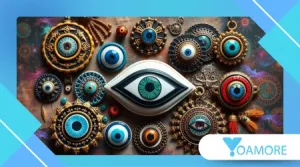
The Evil Eye: Beliefs Across Cultures. Match

The Evil Eye: Beliefs Across Cultures.

The evil eye is an ancient superstition deeply rooted in diverse cultural beliefs worldwide. It is known for its association with a malevolent glare believed to bring misfortune or injury, mainly driven by envy. This belief traces back approximately 5,000 years to the ancient civilizations of Mesopotamia. The first recorded instances were marked on clay… <a class="read-more" href="https://yoamore.com/the-evil-eye-beliefs-across-cultures/">Continuar lendo</a>